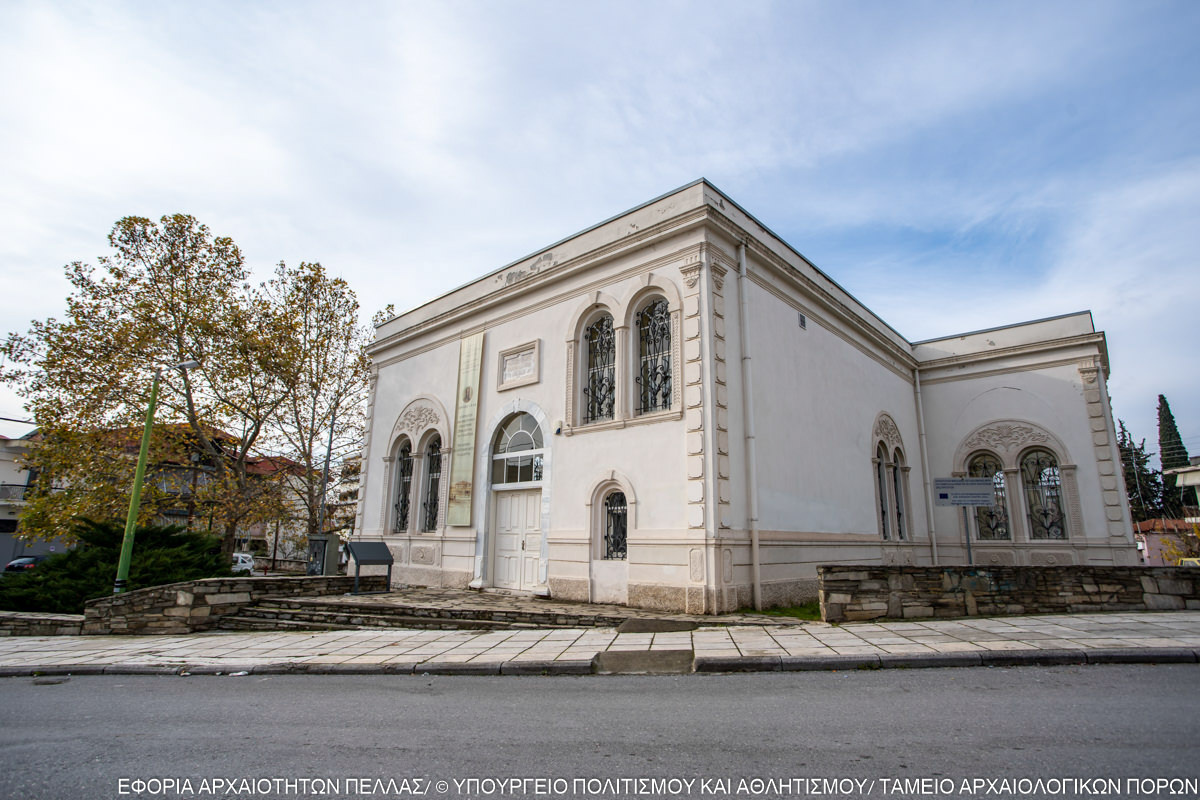
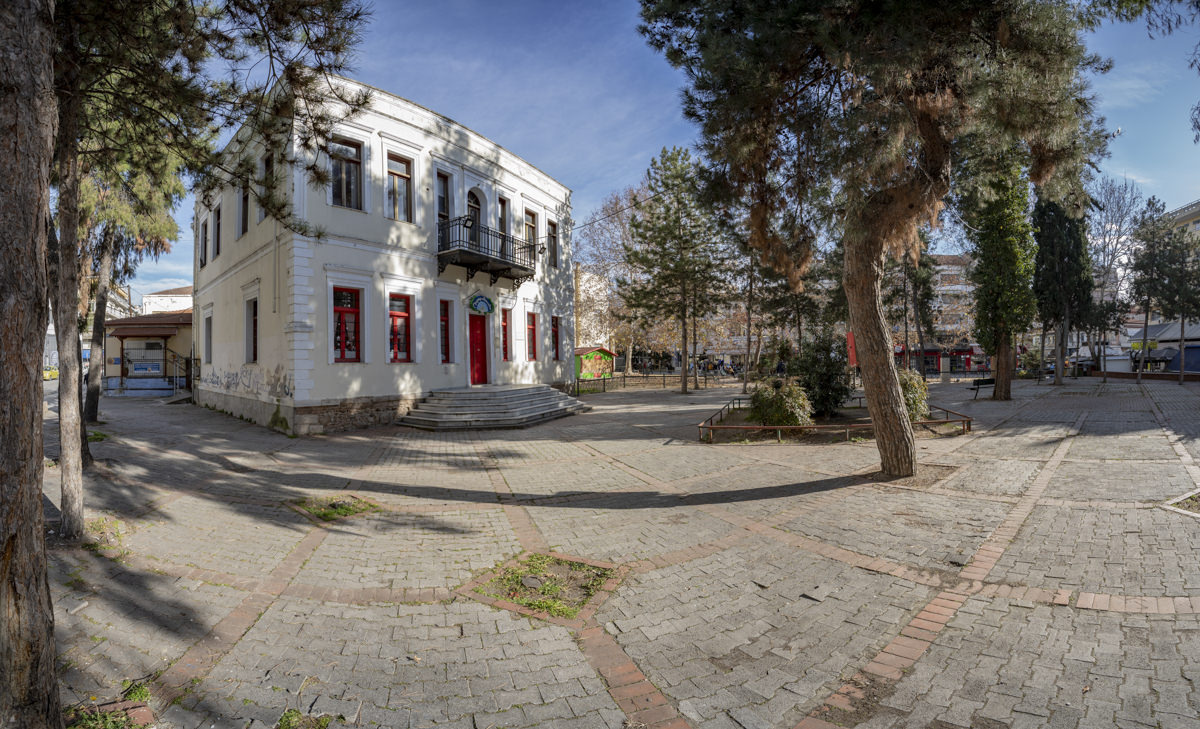
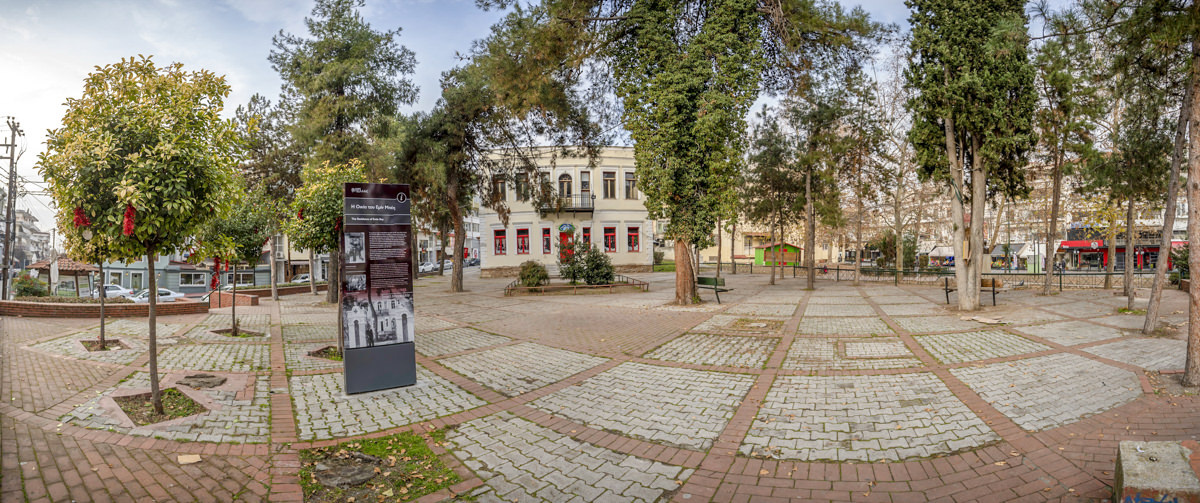
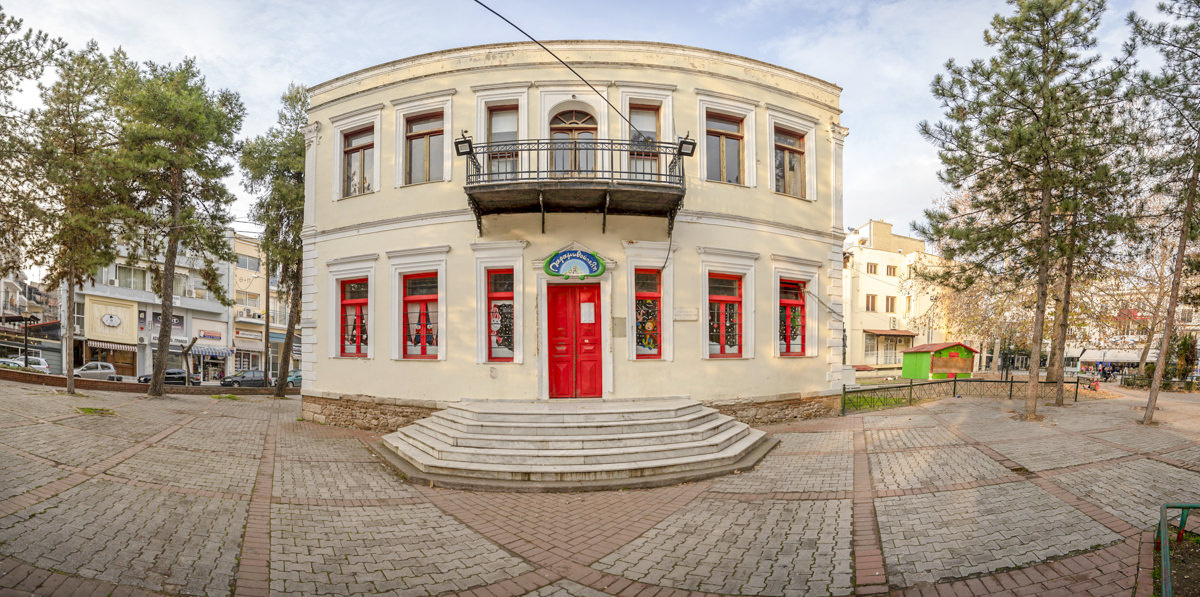
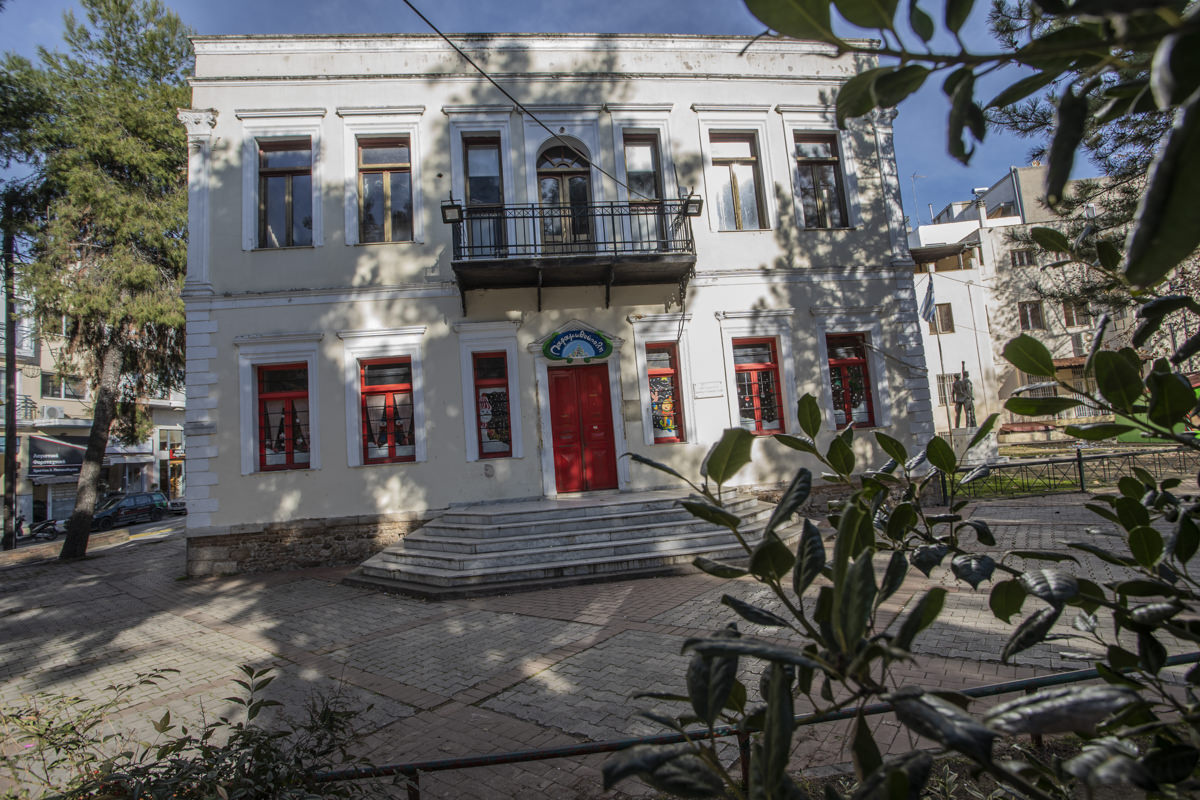
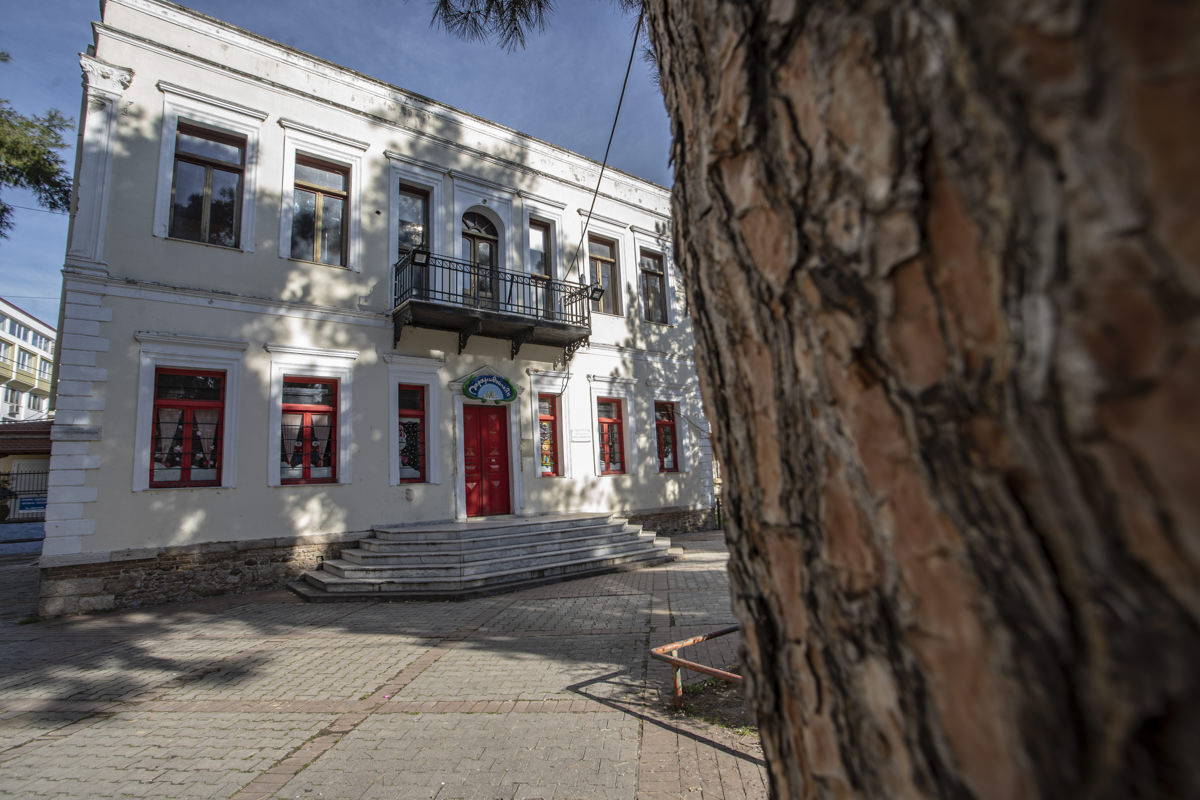
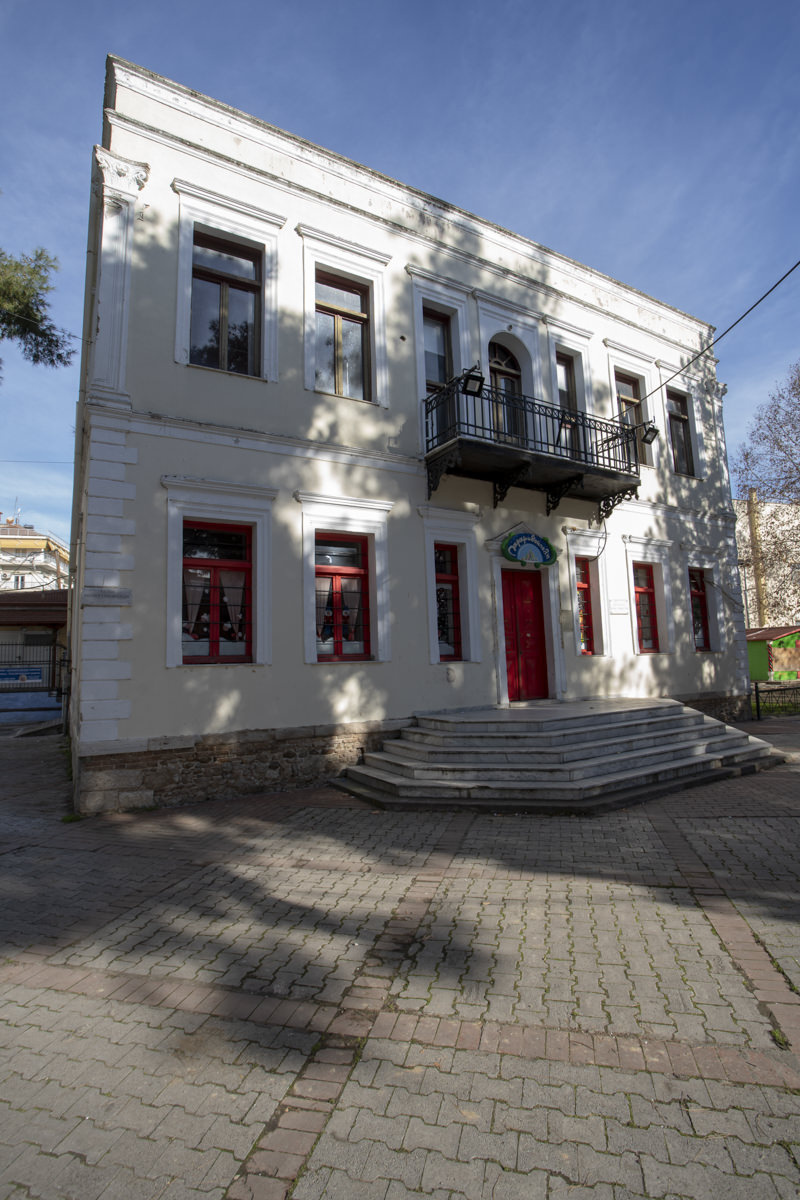
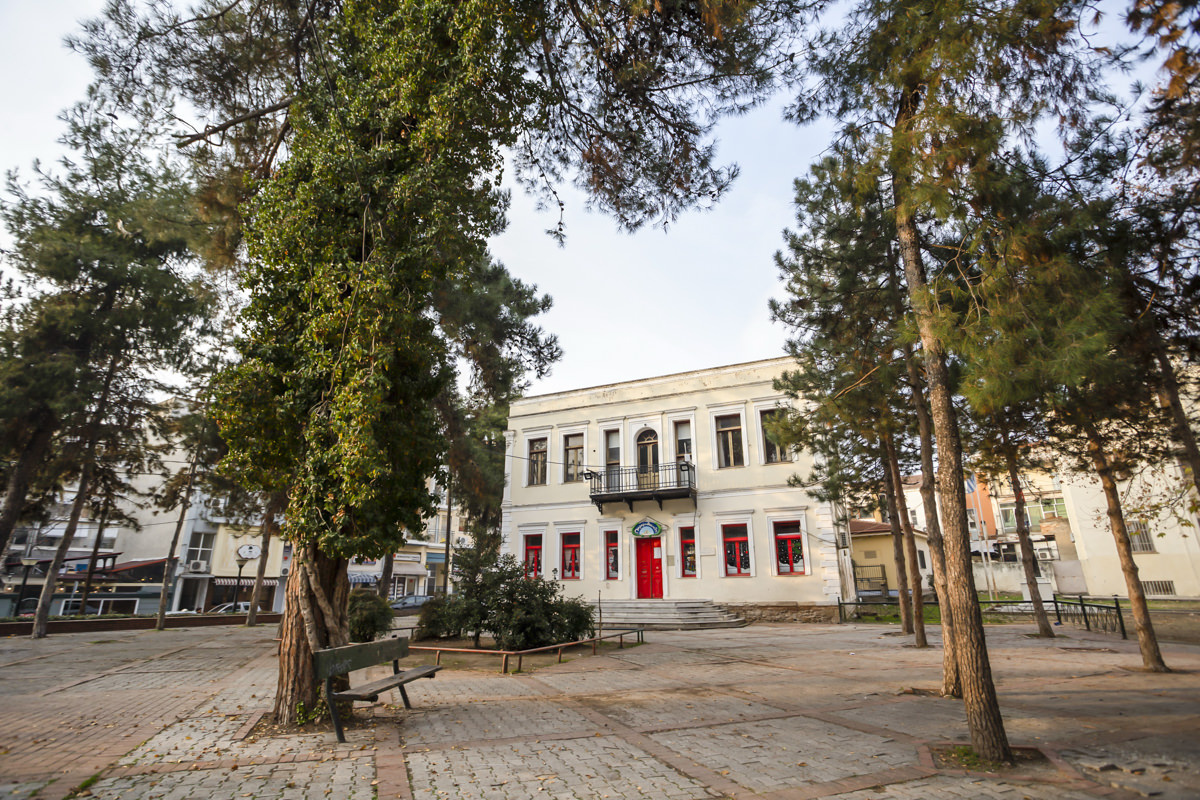
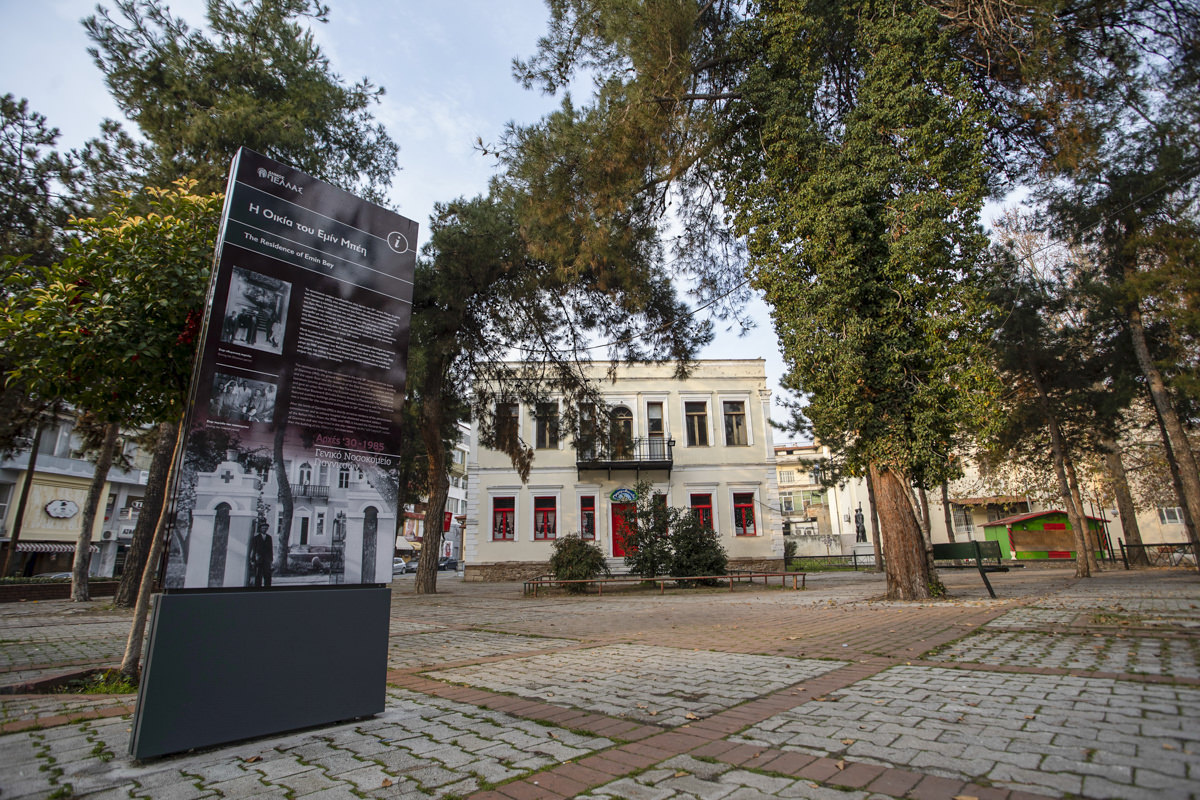
The monument is a two-storey, neoclassical building of almost square plan, with dimensions 15,20X12,30m. It was built in the last decades of the Ottoman Period, at the end of the 19th century and the beginning of the 20th century. A few external steps lead to the raised ground floor. The floors are separated on the facades by partitions, while the roof is covered with a four-pitch tile roof. The windows of the building are rectangular and have frames and a small local cornice. The entrance has stone pilasters and lintels and is flanked on either side by two narrow windows. Above the entrance is a small pediment and then a balcony with cast iron railings. The balcony door of the porch is arched and is also accompanied by two arched windows. A secondary entrance is also present on the rear side. The exterior walls, 70 cm thick on the ground floor and 60 cm on the first floor, are constructed by solid clay blocks and a wooden frame which are also supplemented with clay blocks.
According to oral testimonies, until the Battle of Giannitsa (1912), the ground floor of the building housed the Ottoman administration of the Kaza of Yenice-I Vardar and on the floor the residence of the descendant of Gazi Evrenos and the last Kaymakam, Emin Bey. The newly constructed building was integrated into the public of the city. In the surrounding area there were outbuildings and a tree-lined garden. The house was a model for public and residential Architecture of Giannitsa in the 20th century. After the Battle of Giannitsa (1912) it served for a short period as the residence of the governor and military hospital for the wounded soldiers of the Balkan Wars. From the 1930s until 1985 it housed the General Hospital of Giannitsa.